Photo: HANS VAN GEFFEN
A widespread problem in Catalonia
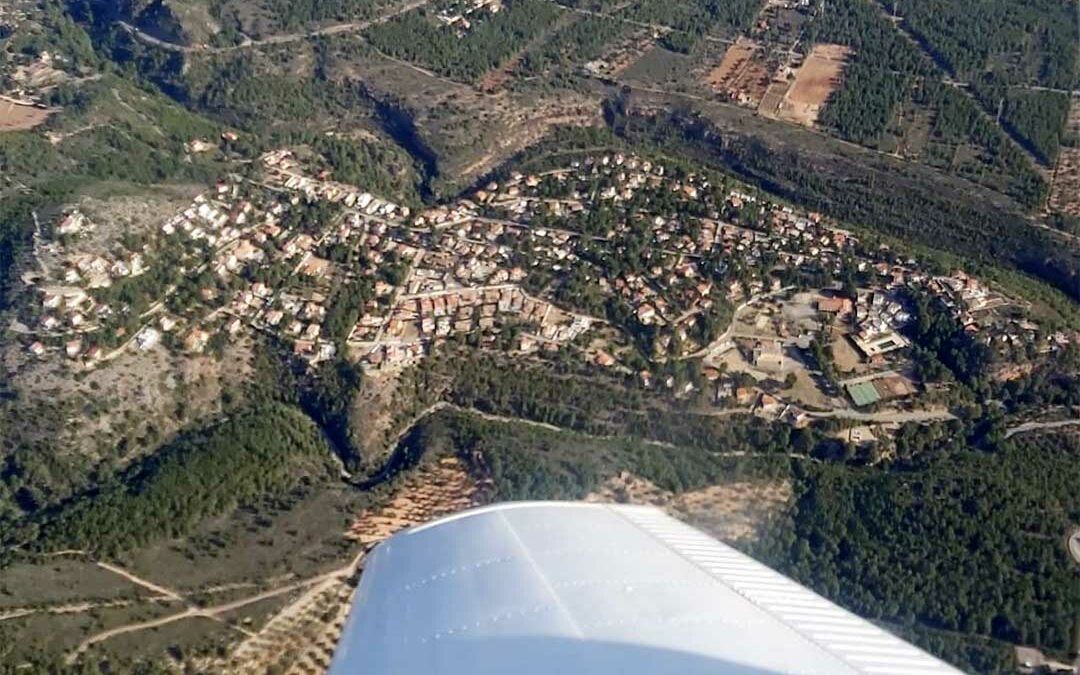
On 7 August 2025, the Catalan newspaper El Punt Avui publishes an article entitled “Urbanitzacions de segona”. According to the article, Catalonia has around 1,500 residential developments, almost half of which still await regularisation. These difficulties can delay the completion of infrastructure and its formal acceptance by local councils, affecting water supplies, street lighting, roads and sewerage.
The newspaper also reports that the Diputació de Barcelona has identified 367 developments with infrastructure and planning deficiencies across 118 municipalities. According to the report, only around ten have completed the regularisation process since 2018. The following figures are given for the developments studied:
- 83% have limited or no basic services.
- 74% have no shops.
- 50% have no public facilities.
- 20% are on land classified as unsuitable for urban development.
These figures relate to the area studied by the Diputació de Barcelona. They do not, by themselves, describe the situation of every residential development in Catalonia.
Planas del Rey: a familiar problem… with its own history
Planas del Rey faces similar difficulties, but has its own administrative and legal history. The former EUCC (Entitat Urbanística Col·laboradora de Conservació), the body responsible for maintaining the development, was dissolved by a court ruling in 2016, after the maintenance period recognised by the court had been exceeded.
This dissolution must be distinguished from the formal acceptance of infrastructure by the Town Council. On 9 April 2021, the Council agrees to accept part of the sports area. This decision does not cover the whole of Planes del Rei.
Understanding the continuing difficulties requires several issues to be considered separately: the technical condition of the infrastructure, the work still needed, its funding and the conditions under which the Council can take responsibility for it. Municipal decisions and budget priorities also form part of this discussion.
What Decree-Law 2/2025 provides for
Catalonia’s Decree-Law 2/2025 of 25 February changes the rules governing certain older residential developments with planning and infrastructure deficiencies whose works still await formal acceptance. Article 3, point 20, provides, among other measures, for:
- Arrangements for basic services suited to the development’s planning status.
- Approved, municipally owned standalone wastewater systems, with costs borne by property owners under the terms of local planning provisions.
- The possibility of accepting individual areas or infrastructure separately.
These provisions are subject to conditions. Their application to Planas del Rey must be assessed against the land classification, approved documents and the stage reached in the reparcelación process. They do not automatically exempt property owners from funding the works.
The decree also strengthens public access to planning and land development management documents, notably through Catalonia’s Urban Planning Register.
What still needs to be clarified for Planes del Rei?
For property owners, the key issue is understanding the practical options available under this legal framework. Several questions require documented answers:
- Which provisions apply to the planning status of Planas del Rey?
- Which areas or infrastructure could be accepted separately, beyond those covered by the 2021 decision?
- What work would be required, and which technical standards would it need to meet?
- How would the costs be shared, and what funding options could be used?
- Where can property owners consult the documents and decisions that determine these choices?
This information would help distinguish the options provided by law from measures actually being considered or already approved for the development.
Conclusion
The El Punt Avui article shows that the difficulties facing Planas del Rey form part of a wider problem in Catalonia. Decree-Law 2/2025 provides tools whose practical relevance to the development needs to be examined.
For residents, the questions remain which services are available, what work is needed, how it will be funded and who will take responsibility for it. An accessible explanation of the applicable decisions and documents would help property owners understand the next steps and their consequences.
10/08/2025
La Tribune de Planas
Updated on 10 October 2026: clarification has been added on the dissolution of the EUCC, the partial acceptance of infrastructure in 2021 and the scope of Decree-Law 2/2025. The options provided by the legislation are distinguished from their application to Planas del Rey and the conditions governing funding.