
Archives from 2000 to 2009
Between 2000 and 2009, several developments shape the administrative status of Planas del Rey: the common areas are registered in the Town Council’s name, renovation projects are drawn up, agreements are signed with the EUCC, courts issue rulings and preparations begin for land readjustment, a procedure that reorganises plots and allocates urban development costs.
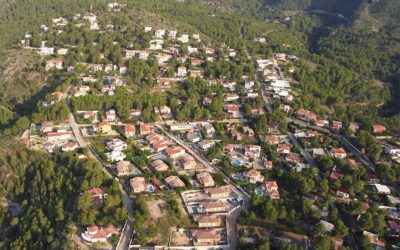
2009 – The project receives final approval, but the disputed agreement and land readjustment continue to delay the works
In 2009, the urban development project for Planes del Rei receives final approval. Yet this progress does not resolve the disagreements that arose the previous year. Some property owners continue to challenge the agreement with the Town Council, responsibility for...

10 September 2009: an agreement divides responsibility for water and waste services between Pratdip and the EUCC
On 10 September 2009, Pratdip Town Council and the Urban Development Conservation Entity for Planes del Rei (EUCC) sign an agreement on drinking water and waste collection. Josep Montané i Vidal signs as Mayor-President, and Christian Peuman as President of the EUCC....

7 May 2009: Miquel Colom’s analysis of the EUCC, services and urban development works in Planas del Rey
On 7 May 2009, Miquel Colom Canal responded to a series of questions concerning the legal and urban-planning situation of Planas del Rey. His report covers several issues: the operation of the Urban Development Conservation Entity (EUCC), the role of Pratdip Town...

2008 – The urban development project is approved, but the agreement remains disputed and unsigned
In 2008, the project intended to complete the infrastructure of Planes del Rei and allow the municipality to formally take it over reaches a new stage. The Municipal Council initially approves the technical project. A new agreement also provides a guarantee long...

25 January 2008: the TSJC annuls EUCC charges relating to water and waste collection
On 25 January 2008, the High Court of Justice of Catalonia (TSJC) delivered a judgment concerning several decisions taken by the Urban Development Conservation Entity of Planes del Rei (EUCC), including the way in which certain costs linked to water supply and waste...

2007 – A new agreement rejected despite a project estimated at around €7 million
In 2007, the EUCC and Pratdip Town Council once again attempted to agree on the conditions required to complete Planas del Rey and enable its formal acceptance by the municipality. A new agreement was negotiated and submitted to the property owners. It provided for...
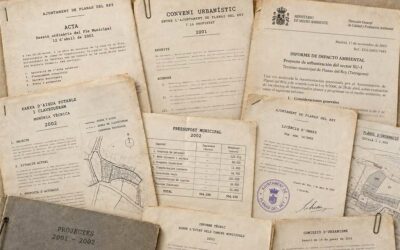
2005-2006 – From €7.36 million to €5.48 million: an approved project, but still no work
Between 2005 and 2006, the project to complete Planas del Rey became more clearly defined. Following several technical reviews and negotiations, its estimated cost fell from €7.36 million to approximately €5.48 million. The property owners approved the continuation of...
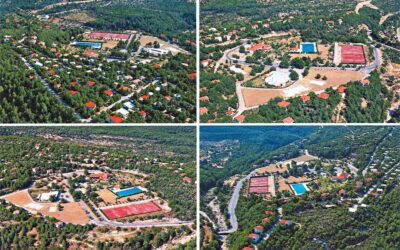
1993–2006: How Planas’s common areas were registered in the Town Council’s name
At the beginning of the 1990s, several common areas and facilities in Planas del Rey were still legally linked to the developer, Francisco Lebasque. However, they had long been used by the property owners and maintained by the Urban Development Conservation Entity of...
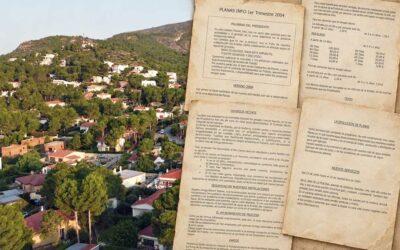
2003-2004 – A first project to complete Planas and secure its municipal acceptance
In 2003, the comprehensive project that had been awaited for several years to complete Planas del Rey finally began to take shape. Its purpose was to identify the work required to bring the development up to standard and prepare for its formal acceptance by Pratdip...
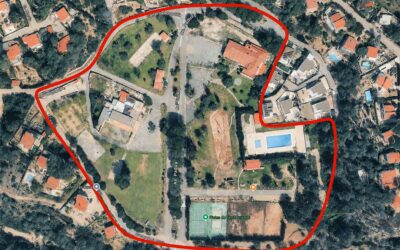
3 June 2004: the court clarifies the Land Registry status of properties 1169 and 1331 in Planas del Rey
On 3 June 2004, Court of First Instance No. 5 in Reus delivered a judgment concerning the description and registration in the Land Registry of two properties linked to the common areas of Planas del Rey: registered properties 1169 and 1331. The proceedings were...
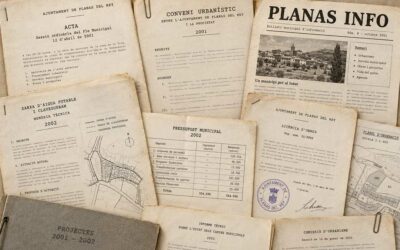
2001–2002: The EUCC launches the renovation of Planas
In 2001, the property owners of Planas del Rey had to choose between continuing the previous work programme funded under the 1999 agreement and preparing a new renovation project. The Urban Development Conservation Entity of Les Planes del Rei (EUCC) decided to...
9 August 2002: Pratdip Town Council authorises the EUCC to occupy the common areas until Planas del Rey is formally taken over
On 9 August 2002, Pratdip Town Council and the Planas del Rey Urban Development Conservation Entity (EUCC) signed an agreement intended to regulate, on a temporary basis, the management of several common areas within the development. The agreement came only a few...

14 March 2002: the EUCC lawyer confirms registration of the common areas in the name of Pratdip Town Council
On 14 March 2002, Francesc Sabaté Vidal, lawyer for the Planas del Rey Urban Development Conservation Entity (EUCC), sent a fax to the entity’s governing board. In it, he states that, following the steps taken with the Land Registry and the Falset Court, the common...

29 October 2001: the Falset Court substitutes for Francisco Lebasque’s declaration of intent
On 29 October 2001, the Court of First Instance in Falset issued an order in judicial enforcement proceedings 195/2001, brought by the Urban Development Conservation Entity of Les Planes del Rey (EUCC). The purpose of the order was to enforce the final judgment of 23...
See also: the archives from 1964 to 1999 and the archives from 2010 to 2019.
Latest articles
 Planas del Rey reparcelación: the council clarifies the first amounts to be paid3 October 2026
 Planas del Rey reparcelación: first cost contributions notified to property owners27 September 2026
 Water and sewerage: what the new regulations mean for Planas del Rey15 September 2026
 Diada – Understanding the History of a Defeat That Became a Symbol11 September 2026