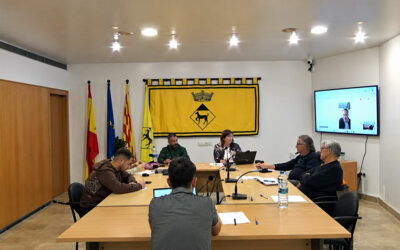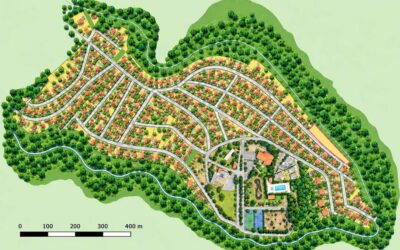
On 19 November 2026, the Mayor of Pratdip, Sílvia Carrillo, signed an official explanatory note on the legal and financial situation of Planes del Rei and the future urban development works. The document confirms several previously known facts, while also providing further details about property owners’ financial obligations and the options being considered to fund the works.
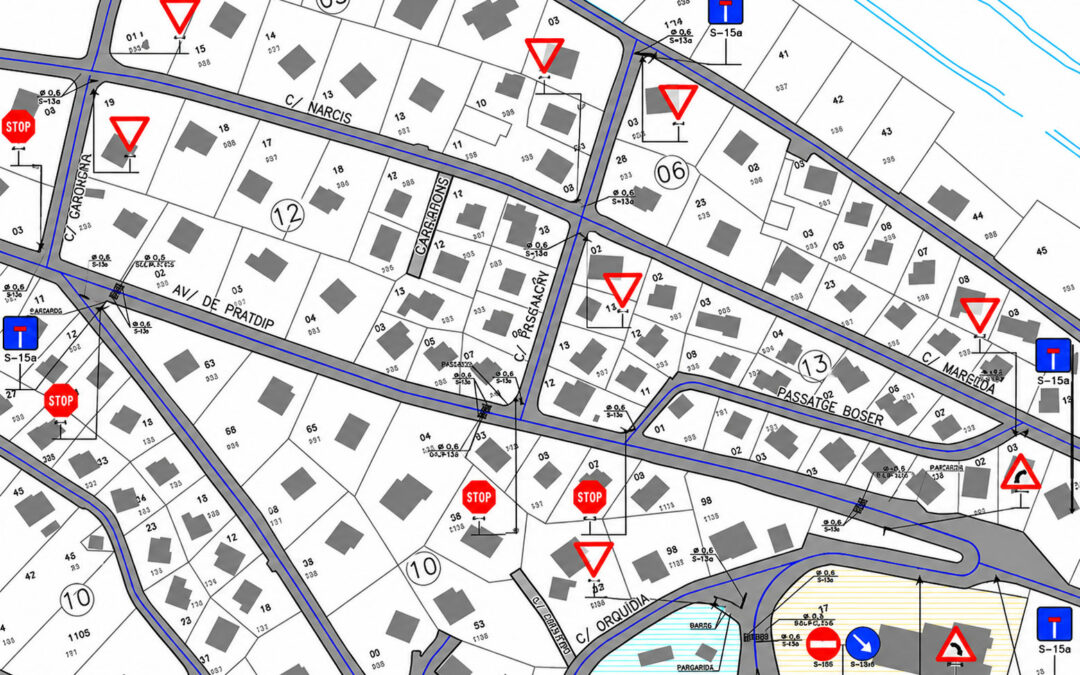
The Town Council has also made the 2007 urban development project, its plans and the documents relating to its approval available through its transparency portal.
Land readjustment is now registered with the Land Registry
The 2007 urban development project received final approval in 2009, but the planned works were never carried out. The land readjustment procedure, intended in particular to allocate rights and financial obligations among the plots, continued for several more years.
The latest amendment to the land readjustment project was definitively approved by the Town Council on 1 July 2022. It was registered with the Falset Land Registry on 28 April 2026, as explained in our article Planas del Rey: the reparcelación officially registered in the Falset Property Registry.
This registration formally establishes the legal status of the plots and the urban development obligations attached to them. These obligations also pass to new owners when a property is sold.
A works budget that still needs updating
The provisional charges currently recorded in the Land Registry were calculated on the basis of the 2007 project, which had a budget of €6,161,654.90 excluding VAT.
In July 2025, the Diputació de Tarragona estimated the cost of the works at €11,249,178.51 including VAT. This estimate excludes both the electricity infrastructure and the wastewater treatment plant (EDAR). It therefore does not represent the full cost of all the works needed to complete the development.
The Diputació is currently carrying out a comprehensive review of the project to bring it into line with current technical and environmental standards and prices.
The provisional amounts allocated to individual plots will have to be recalculated once the updated project has been approved. The final settlement can only be established after the works have been completed and the expenditure verified.
Land readjustment expenses for 2026
The Town Council also addresses the €357,829.86 including VAT in land readjustment management expenses charged to property owners under Municipal Decree 2026-0216 (file 265/2026).
It explains that this amount covers expenses already incurred: registration with the Land Registry, technical fees, legal services and individual notifications. It does not include the future urban development works.
Payment will be collected by BASE, with the option of paying in three instalments without a surcharge.
Water supply and sewerage take priority
The Town Council is considering carrying out the works in stages, giving priority to the water supply and sewerage networks. Roadworks, public lighting and the electricity network could be dealt with at a later stage, depending on the updated project and available funding.
According to an initial municipal estimate, water supply and sewerage would account for approximately half the total cost of the works. This proportion has yet to be confirmed.
To finance this first stage, the Town Council is considering a concession arrangement.
A concession to finance the first stage of the works
Under the proposed arrangement, a company would initially finance the construction of the water supply and sewerage networks, then gradually recover its investment while operating these services.
A period of 20 to 25 years is being considered, although no final decision has been made.
The Town Council explains this approach in terms of its limited financial capacity. Pratdip’s annual current revenue amounted to €1,616,861.90 in 2025, far below the investment required. According to the municipality, taking out a loan to advance the full cost of the works would not be compatible with its financial situation and statutory borrowing limits.
If implemented, a concession could therefore allow the first works to begin without the municipality having to advance their full cost and without requiring property owners to pay all the contributions intended to finance those works immediately.
However, this option remains under consideration. It would require an economic feasibility assessment, approval of a contract and a competitive tendering procedure. No company has yet been appointed.
What would the financial consequences be for property owners?
If a company finances the first stage of the works, it will subsequently need to recover the money invested.
How would that investment be repaid? Through water and sewerage bills, through urban development contributions charged to property owners, or through both?
The Town Council says it wants to prevent the same expenditure from being charged twice.
Would a concession reduce the contributions payable by property owners, or merely defer part of the payment?
The municipal note does not yet answer this question, nor does it establish whether this financing arrangement would entail additional costs.
What property owners should take away from this announcement
The communication of 19 November 2026 provides useful clarification on land readjustment expenses, the estimated cost of the works and the financing options being considered by the Town Council.
In particular, it confirms that the management expenses already charged are separate from the future urban development works and that a concession could allow the water supply and sewerage investment to be financed over a longer period.
The Town Council states that it will seek any available public grants. However, it points out that the rules governing such grants generally exclude urban development works that property owners are legally required to finance. The actual possibilities for public funding therefore remain to be determined according to the type of works and the relevant funding programmes.
Nevertheless, several essential questions remain unanswered: how much will each property owner ultimately have to pay, when will payment be due and under what arrangements? What proportion of the works might qualify for grants or other forms of public funding?
These questions are particularly important because property owners will face financial obligations whose final amounts are not yet known. It also remains to be seen to what extent the various financing options under consideration might reduce those costs.
La Tribune de Planas will continue to follow developments so that everyone can understand the decisions taken and their financial consequences.
La Tribune de Planas
English translation of the municipal explanatory note
La Tribune de Planas provides a complete English translation of the explanatory note signed by Sílvia Carrillo on 19 November 2026, allowing English-speaking property owners to read the information issued by the Town Council.
This translation is provided for information purposes only. In the event of any discrepancy, the original Catalan document takes precedence.
Reference documents
- Official explanatory note issued by Pratdip Town Council on 19 November 2026, in Catalan;
- Official notices relating to the urban development project, in Catalan;
- Documents approving the 2007 urban development project, in Catalan;
- 2007 urban development project, in Catalan (Pratdip Town Council Transparency Portal);
- Plans for the 2007 urban development project, in Catalan (three volumes, Pratdip Town Council Transparency Portal);
- Municipal Decree No. 2026-0216 of 14 July 2026 (file 265/2026) – Settlement of land readjustment management expenses for Planas del Rey, in Catalan.