
Pratdip Town Council receives support from ANAV, the Ascó-Vandellòs II Nuclear Association, for municipal projects. The company’s announcements confirm its involvement in improvements to the village community centre, known as the Casal, and in a solar power project.
For residents of Planas del Rey, this raises two questions: how does the residential development feature in the projects funded, and how is its protection organised given its proximity to the nuclear power station? The documents reviewed identify some of the support provided, describe the planned emergency measures and highlight questions that remain unanswered.
Which projects does ANAV support in Pratdip?
On 28 April 2016, ANAV announces an agreement with the Town Council to continue fitting out the municipal Casal in the village’s former cooperative building. The company states that it has supported both phases of the project: first, a multipurpose room for cinema, theatre and leisure activities; then, a bar and café area incorporating a room for older residents.
This funding concerns the Casal in the village of Pratdip.
On 27 January 2023, ANAV announces a further agreement to contribute to a solar panel project intended to supply municipal facilities.
These announcements confirm support for the municipality, but do not specify the amounts contributed or the payment arrangements. The documents reviewed do not establish a fixed annual contribution of €300,000 or a cumulative total of several million euros.
What the nuclear emergency plan provides for Planes del Rei
Pratdip’s Municipal Nuclear Emergency Plan (PAMEN), updated in May 2024, explicitly includes Planes del Rei. It sets out the municipal response within PENTA, the off-site nuclear emergency plan for the Ascó and Vandellòs power stations.
The document places the residential development 8.5 km from the power station and classifies it as zone IC, a subdivision of the emergency planning zone extending 10 km around the station.
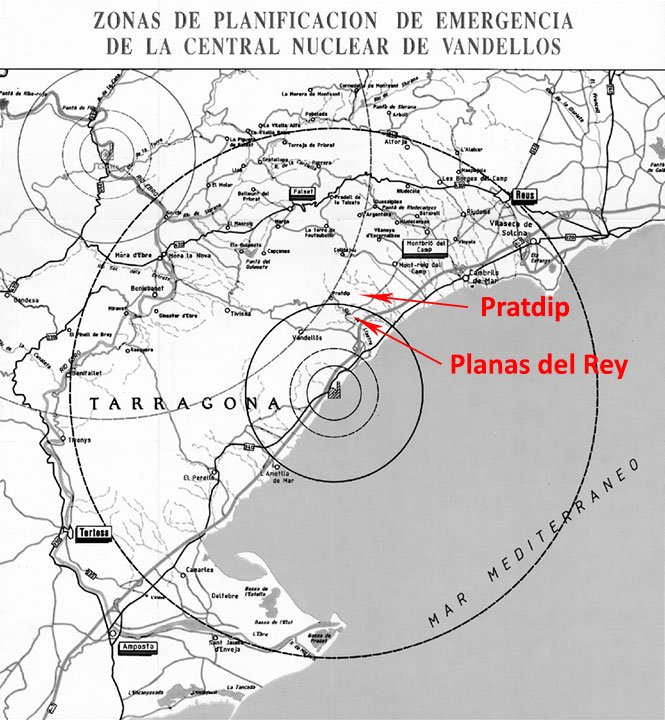
The plan lists the following arrangements:
- a route for delivering warnings to residents that passes through Planas del Rey;
- a fixed public address system in Planes del Rei;
- the residential development’s Casal Social as an assembly point;
- municipal services responsible for warnings, evacuation and assistance to residents.
The equipment inventory also lists mobile public address equipment in vehicles and records “No” under sirens.
Planas is therefore included in the planned response. However, in information provided in September 2026 for our article on wildfire risk, the Town Council states that the fixed public address system does not cover the entire residential development and that its operation cannot be guaranteed because Planas has no public electricity network.
This concerns a warning system also listed in the PAMEN. It raises a practical question: what additional methods would ensure that all residents receive a nuclear emergency warning, particularly in areas beyond the loudspeakers’ coverage?
Can the access roads cope with a large-scale evacuation?
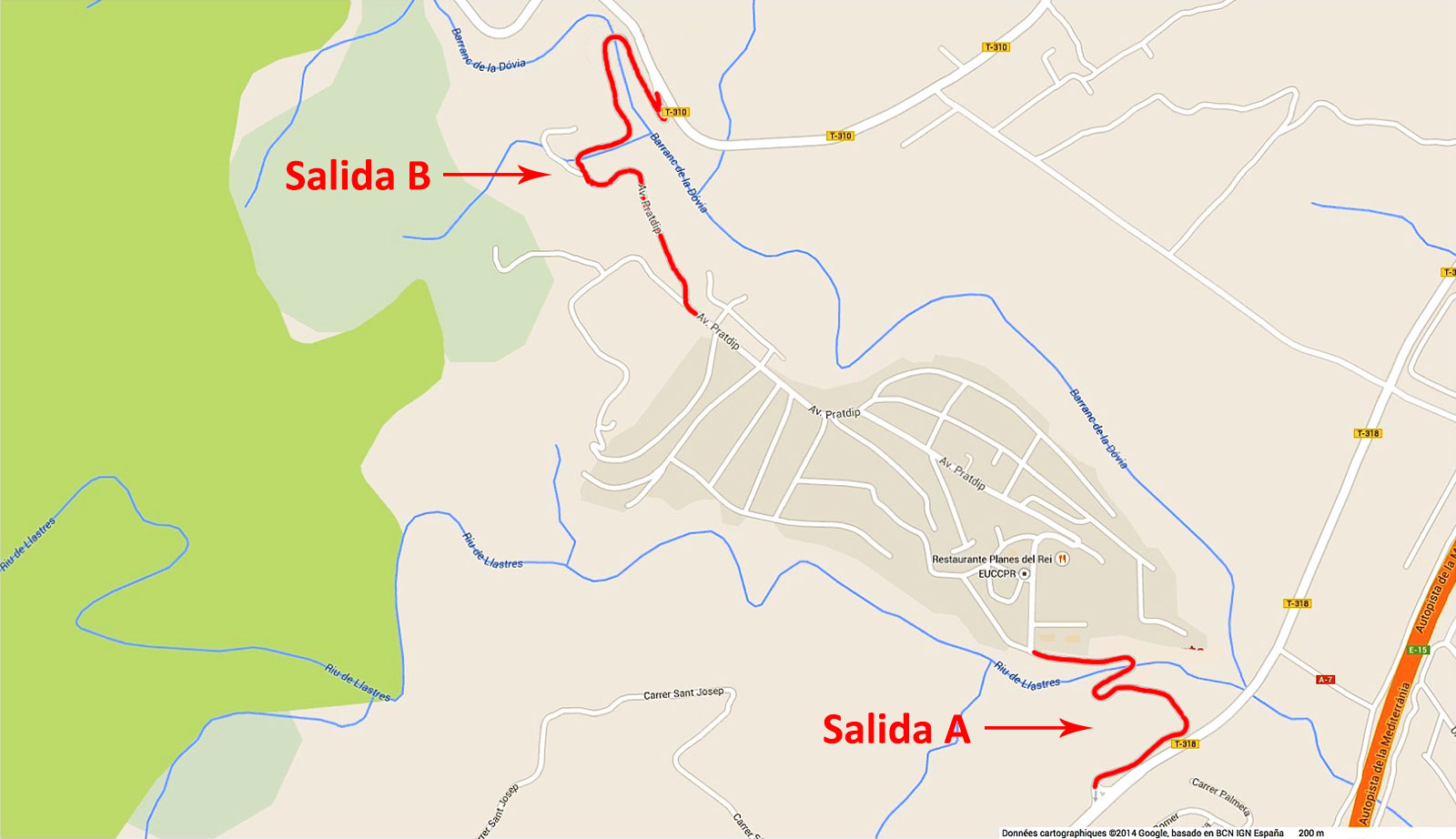
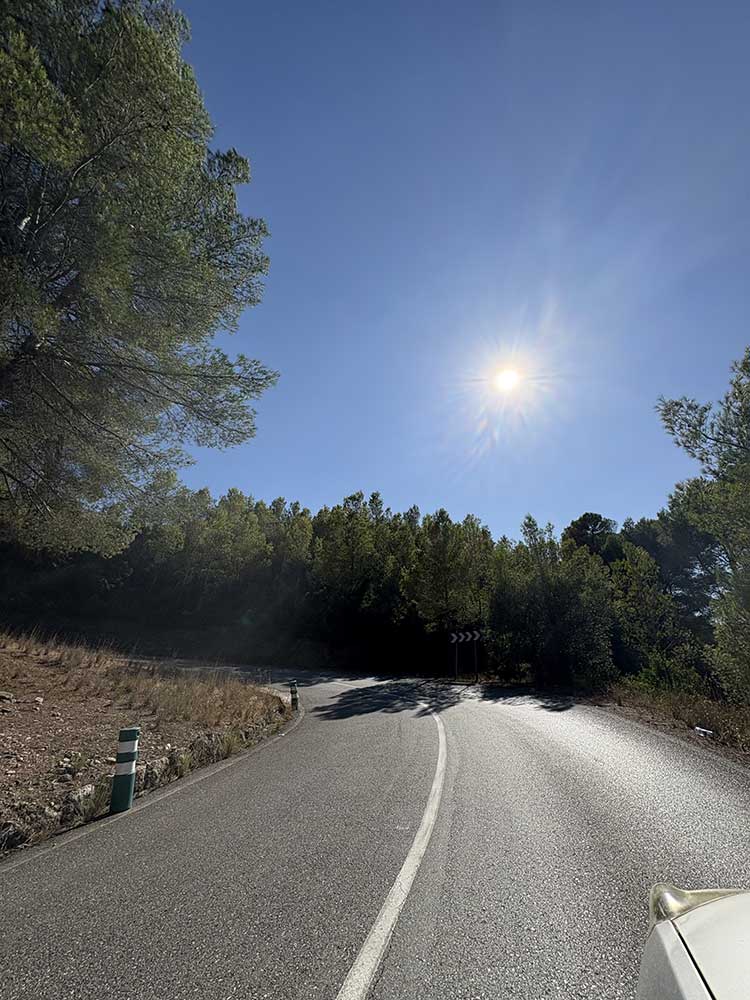
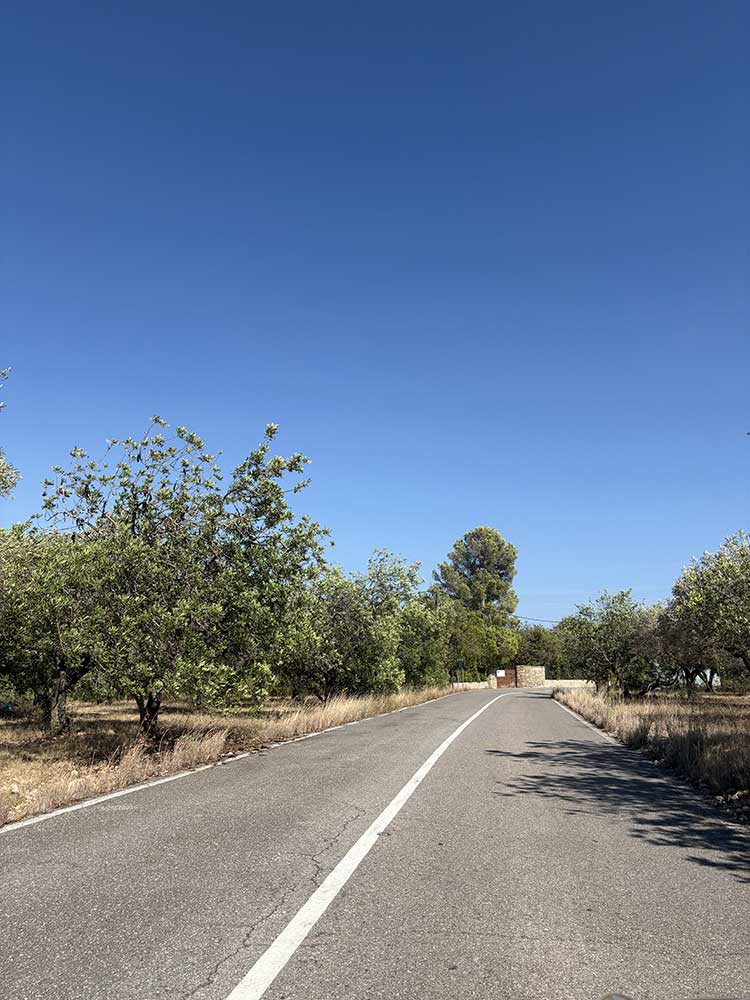
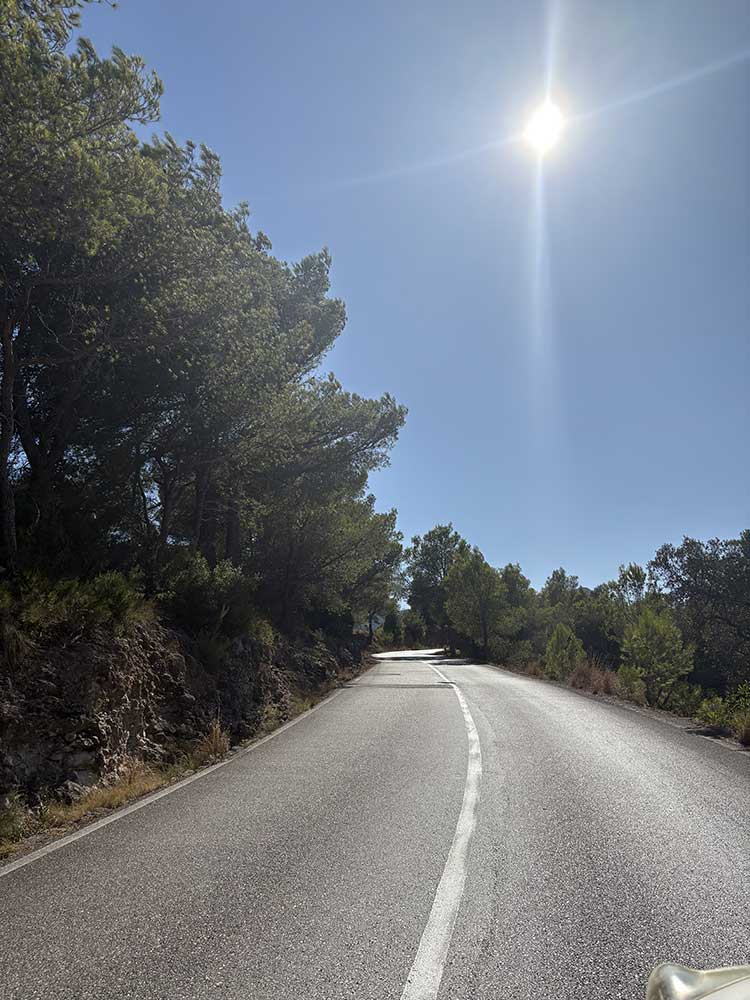
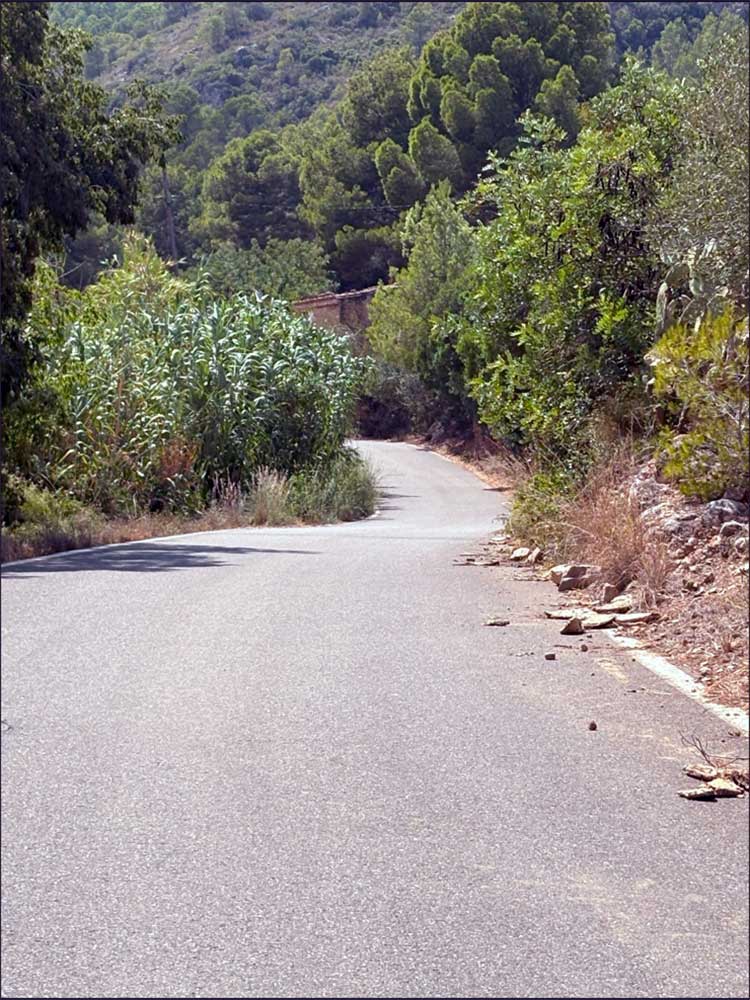
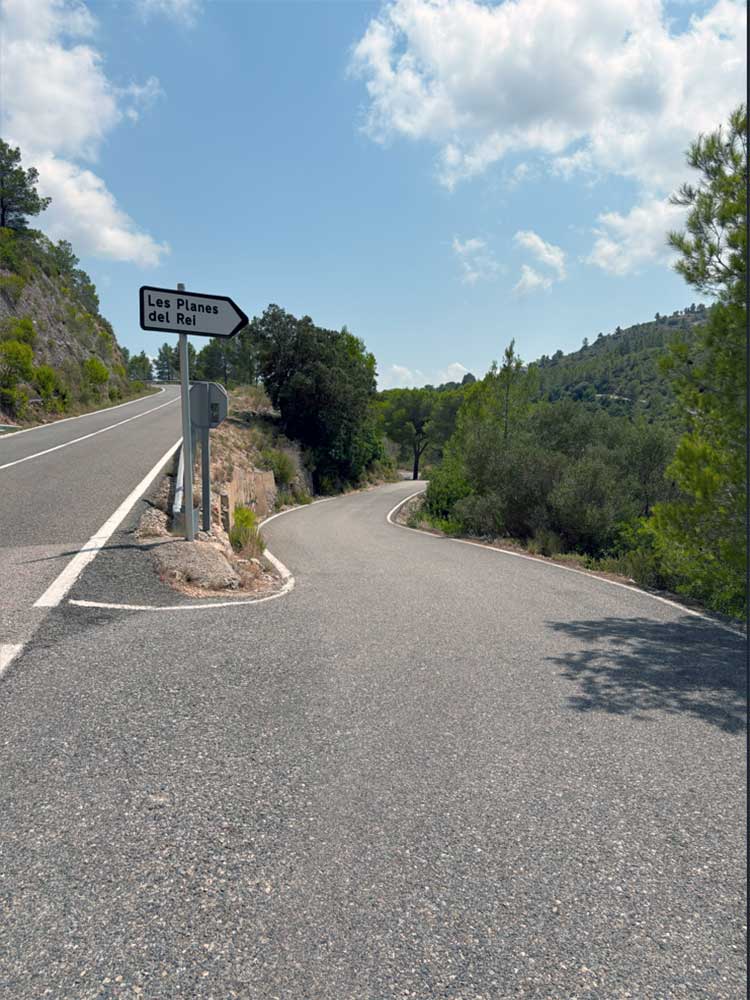
Planas del Rey has two road exits, marked on the map: exit A towards Vandellòs i l’Hospitalet de l’Infant and exit B towards Pratdip. Traffic conditions on these two access roads are therefore an essential consideration when planning an evacuation of the residential development.
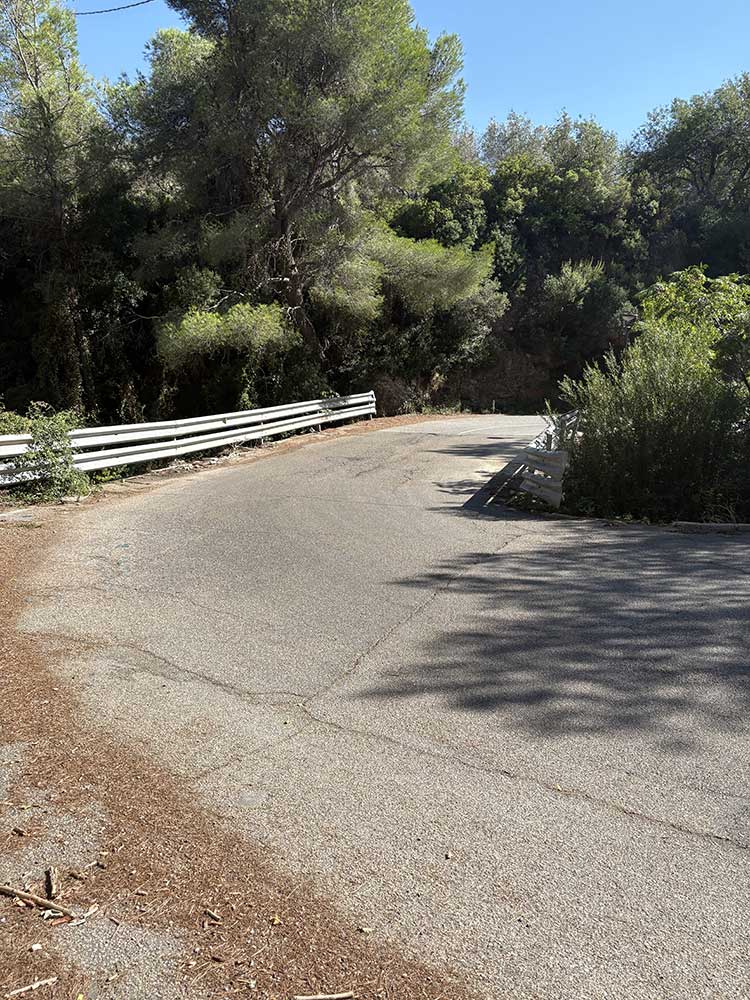
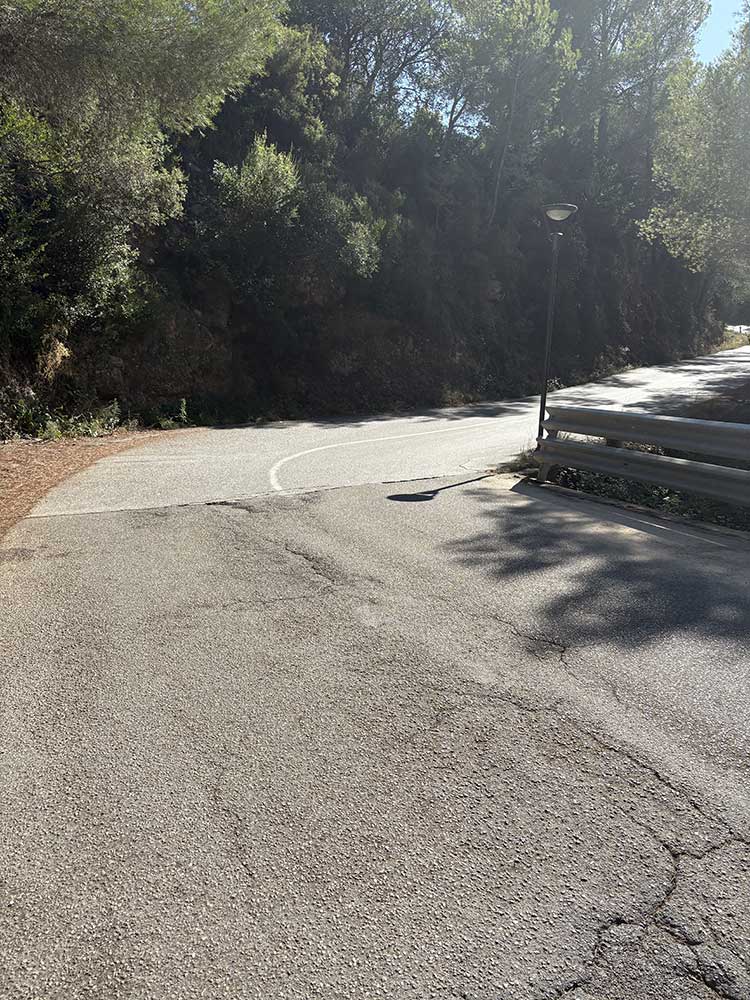
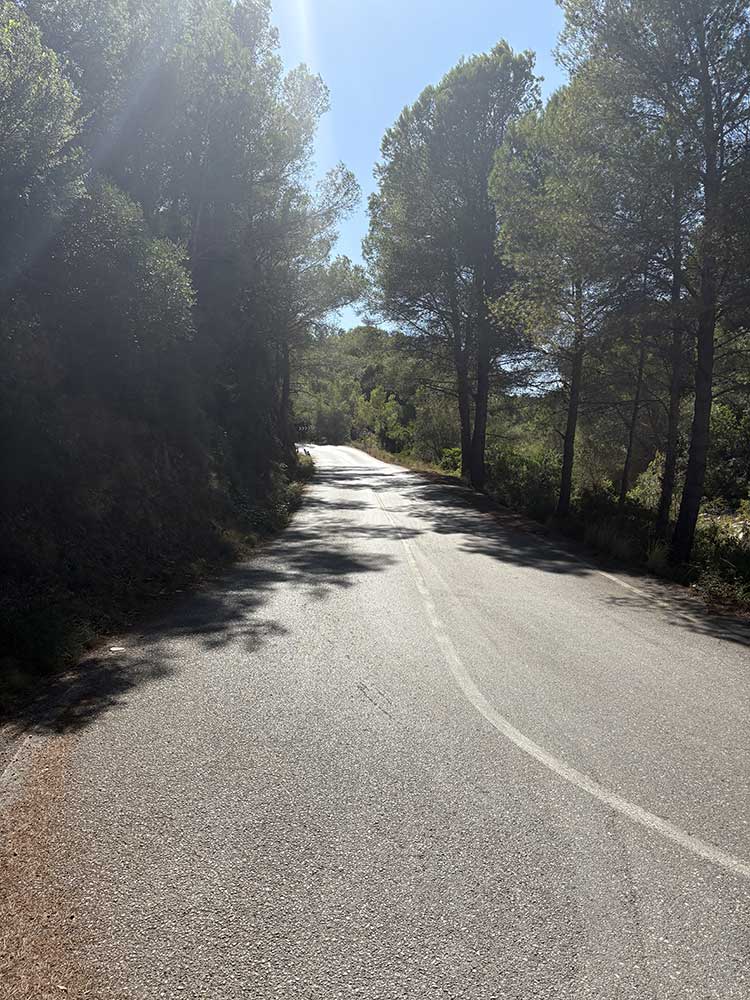
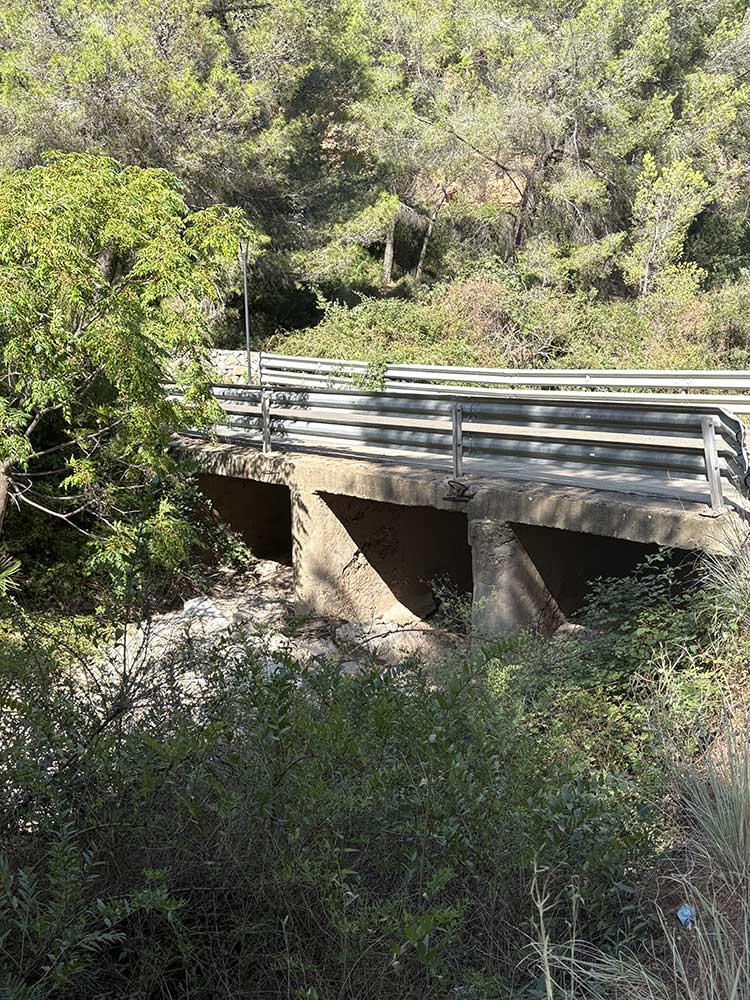
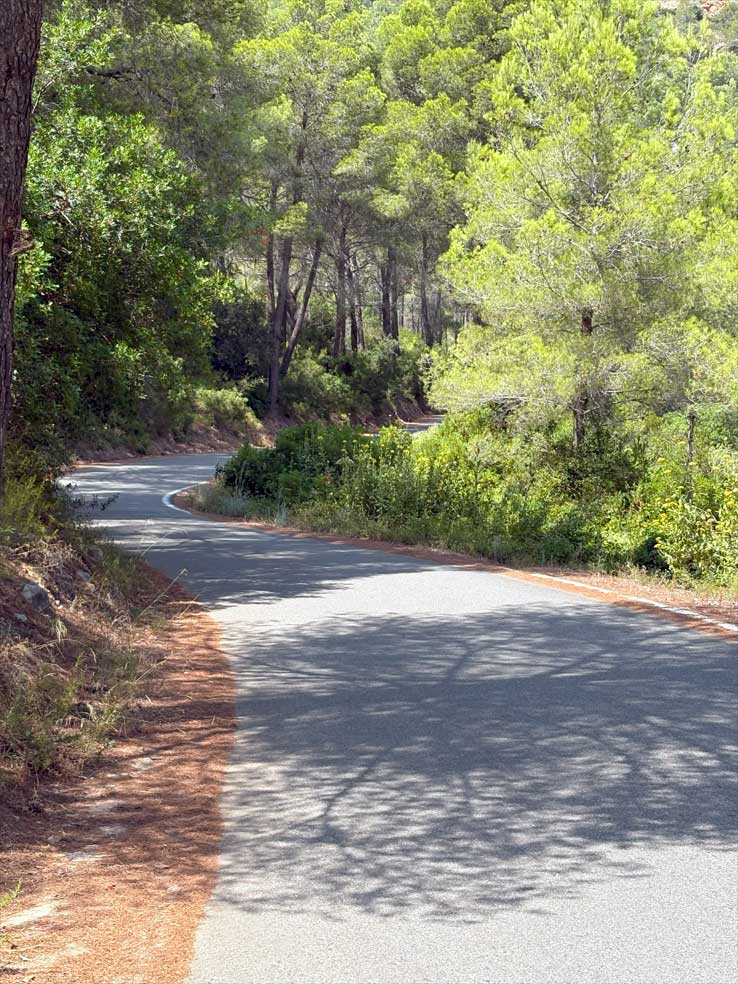
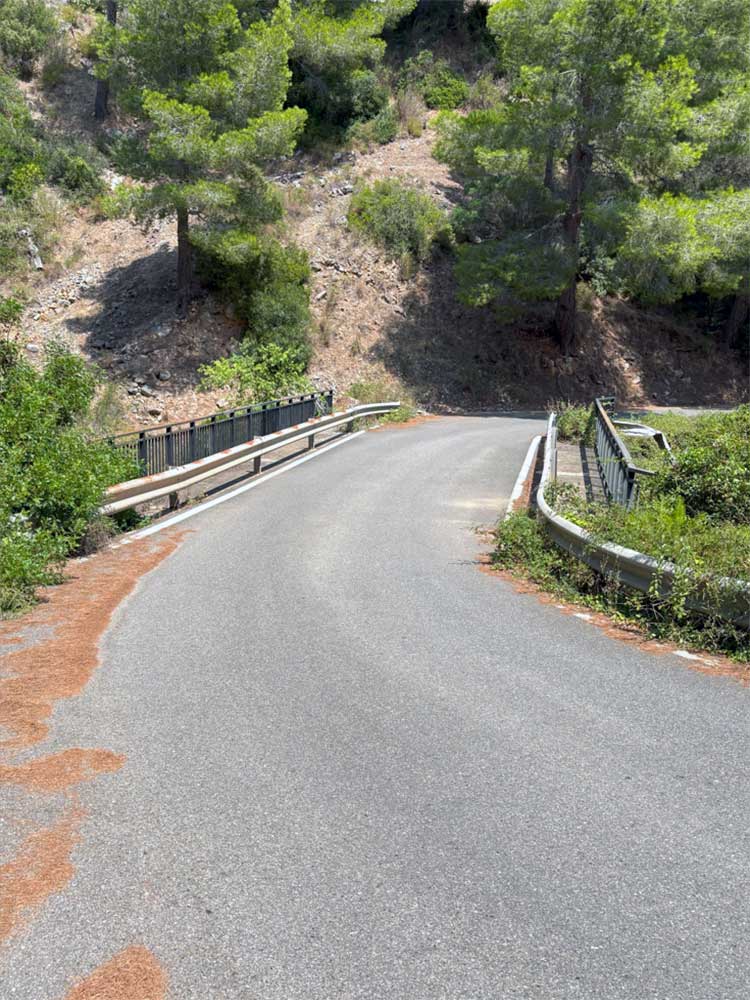
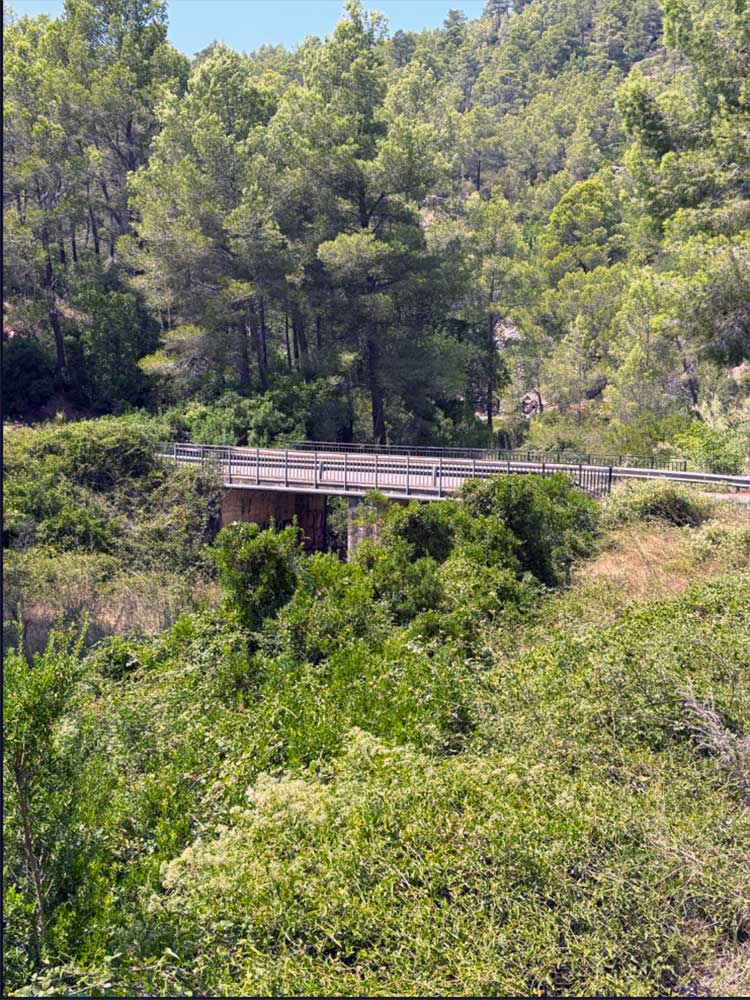
The observations presented here show relatively narrow roads, bends and narrow bridge crossings. Both access roads also pass through wooded areas. These features raise questions about how large numbers of vehicles could leave at the same time while emergency services enter.
Exit A has a centre line and lighting along some sections. Exit B towards Pratdip has long stretches without street lighting or road markings, as well as a narrow bridge. The photographs illustrate these constraints; a technical assessment would establish their implications for traffic flow.
The 2006 wildfire self-protection plan already warned of congestion on the roads leading out of Planas because of steep gradients and sharp bends, particularly towards the T-310. This observation concerns the same access roads, although the response required depends on the type of emergency.
The PAMEN lists two evacuation routes for the municipality: one towards Falset, via Colldejou and La Torre de Fontaubella; the other towards Montbrió del Camp, along the T-310 road through Mont-roig del Camp. The table does not detail how each part of Planes del Rei connects to these routes.
How would traffic be managed at Planas’s two exits? How would vehicles be directed through narrow sections? What arrangements would apply if an access road became impassable, for example because of a wildfire? These details would help residents understand how the planned evacuation would work on the ground.
Exit A
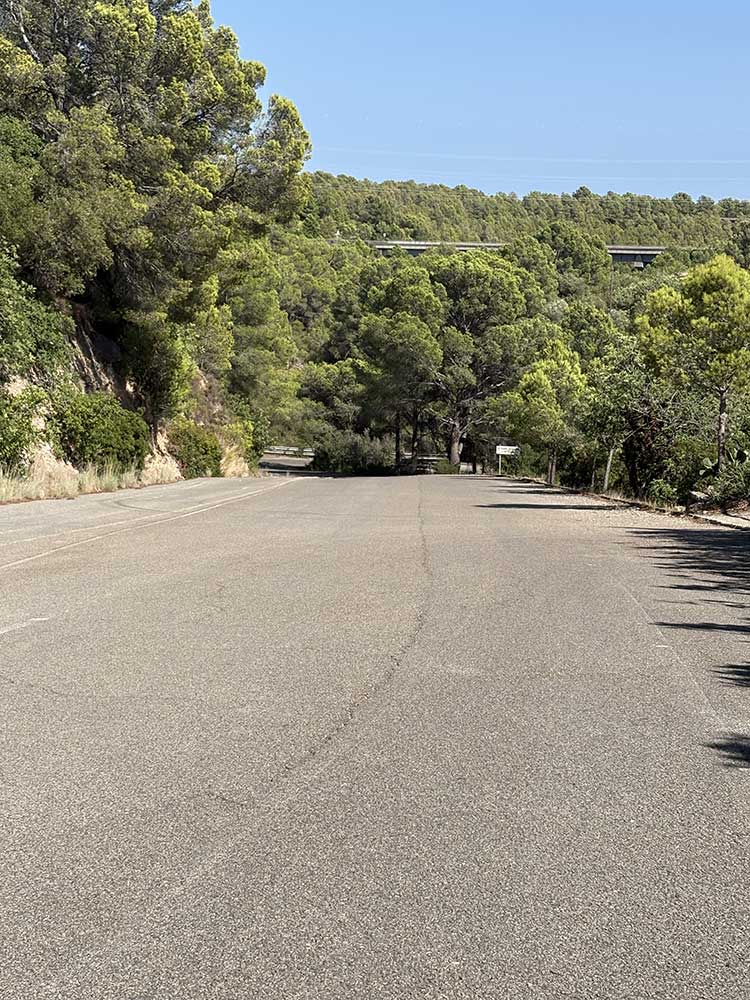
Exit B



Clear instructions for all residents
The plan provides for warning systems and an assembly point in Planas del Rey. Residents need to know what to do when an alert is issued: where to receive instructions, when to shelter indoors and, if an evacuation is ordered, where to go and which route to take.
This information must also be understandable to seasonal residents, visitors and people who do not speak Spanish or Catalan. Assistance arrangements for people without a vehicle or with limited mobility must also be explained.
In its September 2026 response concerning wildfire risk, the Town Council states that it holds up-to-date information on vulnerable residents, in coordination with medical and social services. It also announces a phase of public information, preparation, signage and planning of emergency exercises beginning at the end of 2026.
How these resources and activities fit into the nuclear emergency response still needs to be clarified. The PAMEN describes responsibilities and equipment recorded in May 2024, but does not establish their current working condition or which tests have been carried out since.
Local resources and the Town Council’s clarifications are detailed in our article on wildfire prevention and emergency arrangements in Planas del Rey. Instructions and assembly points must be distinguished according to the type of risk.
How could safety improvements be funded?
The characteristics of the access roads and the reported limitations of the public address system raise questions about the resources allocated to safety in Planes del Rei: road maintenance, traffic management, reliable warnings and residents’ preparedness.
The partnerships announced by ANAV form part of its support for local development. The documents reviewed do not specify whether this funding can cover civil protection improvements. The agreements would clarify the available funding options and their conditions.
Whatever the source of funding, the practical question remains: what work, equipment and public information activities are planned for Planas del Rey, with what resources and on what timescale?
Conclusion
ANAV’s support for projects in Pratdip is documented. However, the sources identified do not establish the total amounts contributed or identify projects funded in Planas del Rey.
As regards nuclear emergency preparedness, the residential development is included in the PAMEN. Yet the constraints of both access roads and the limitations of the public address system reported by the Town Council show why residents need an explanation of how the planned measures would be implemented locally.
A funding report and accessible practical instructions would provide concrete answers. They would help residents understand investment priorities, planned improvements and the arrangements intended to protect the population.
31/08/2025
La Tribune de Planas
Updated on 10 October 2026: this article has been revised using ANAV’s announcements, the municipal nuclear emergency plan updated in May 2024 and the information provided by the Town Council in September 2026 concerning wildfire risk. The stated annual contribution of €300,000 and the cumulative amount mentioned have been removed because no supporting documentation was identified. The provisions concerning Planes del Rei have been incorporated, and the relationship between the residential development’s two exits and the routes listed in the municipal plan has been explained.